
Cats & Kittens -Nutrition & Health
Why Is Water So Important
As we are a Pet Drink Company with Delicious Drinks for Cats and Kittens let’s first talk about the value and necessity of good nutritional water and an adequate daily intake.
A balanced diet is not the only necessary part of keeping your dog healthy. Water for drinking is also a very important part of your cat’s daily requirements and overall nutrition. Water is the main component of healthy, living cells of the body. Without water, your cat will dehydrate. In order for your cat to get enough water daily, you need to provide water along with a healthy, balanced diet (which also provides some moisture).
WHAT DOES WATER DO FOR CATS ?
The purpose of water is to carry and move important nutrients into and out of the cells of the body. It aids in the digestion of food and helps the body to absorb the nutrients. Water also serves to cool the body down and works to maintain a normal body temperature.
Water lubricates and cushions joints and makes movement easier. The spinal cord and other internal tissues are also cushioned by moisture and wastes are removed from the body through urination and bowel movements.
Basically every important body function requires water and without adequate supply, your cat can become ill quickly and become dehydrated. Organs will eventually become damaged with sustained water deficiency. If the deficiency lasts long enough, organs (such as kidneys, liver, etc.) will begin to shut down. Death will follow shortly after.
The main purpose of water is to transfer important nutrients in and out of the body’s cells. It helps digest food and absorb nutrients. … A healthy cat should drink about 40 ml of water per kilogram of its body weight per day.
Providing Adequate Water to Cats and Kittens
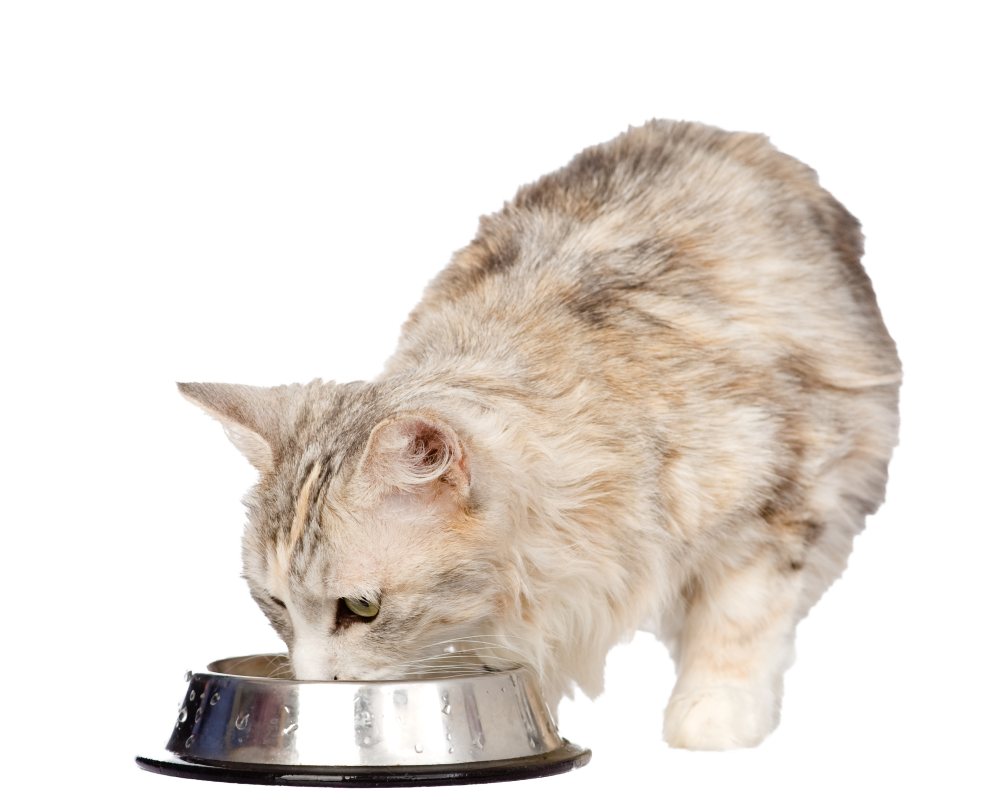 Keep your cat’s bowl filled at all times and always refill with fresh, clean water daily. As a rule of thumb, cats should drink approximately one ounce of water per pound of body weight each day. There are many factors that can affect how much your cat will drink, however.
The six basic nutrients are:
Water, proteins, fats, carbohydrates, minerals, and vitamins. These essential nutrients are required as part of the cat’s regular diet and are involved in all of the basic functions of the body.
A complete and balanced diet is essential to maintain your pet in good health. He needs fresh water, protein, fats, minerals, vitamins and carbohydrates. Water is by far the most important nutrition your pet requires. … Protein is a very important part of your pets’ diet, as it is the building blocks for life.
How much water should a cat drink daily? How much and how carefully you have to monitor him depends on several factors:
Size: On the average, a healthy Adult Cat drinks about 1/2 to 1 ounce of water per pound of body weight per day.
Food: A healthy diet is as important as water and the type of food your cat eats affects his/her water intake. Cats that eat only dry food will need a little more water than those that eat canned. Also, avoid ingredients that can artificially increase your cat’s thirst such as sodium.
Age: Kittens need about a 1/2 cup every two hours and need to be closely monitored. Senior cats tend to naturally monitor themselves.
The recommendation is to get them on a water-rich diet. Cats are designed to get their water with their food. Although mice, a cat’s normal food, are about 70% water, and canned food about 78%, dry food is between 5%-10% water.
As it turns out, today’s domestic tabby evolved from desert-dwelling ancestors, a heritage that no doubt left our furry felines with their grace, hunting prowess — and low thirst drive.
We know that a cat’s sensitivity to thirst is blunted compared to a dog. They don’t voluntarily drink water like a dog would.”And because cats naturally produce highly concentrated urine we’re setting them up for urinary tract problems when their diet is low in liquids.
However, why would we close the barn door after the horse is a mile down the road? Why not practice preventive nutrition by feeding them [moisture-rich] canned food before they end up with urinary tract problems?
Cats are designed to get their water with their food. Although mice, a cat’s normal food, are about 70% water, and canned food about 78%, dry food is between 5%-10% water. That’s why “canned food does a much better job of keeping your cat well-hydrated says WebMD. Think of canned food as hosing down your cat’s bladder several times a day.
Cat Feeding Mistakes: Offering Too Little Water
Clearly water is vital, for cats as well as people. Essential to life, water accounts for 60% to 70% of an adult cat’s body weight, say ASPCA experts. A serious water deficiency can have critical repercussions for pets, causing serious illness or death.
Although wet foods can go far toward meeting your feline friend’s water needs, cats should also have several sources of fresh water available through the house, say the pros. “Pay attention to where the cat likes to be so that there’s water there,” Case suggests. “And be aware that some cats prefer running water; others can detect the taste of chlorine in tap water so you might want to buy bottled water for them.”
Exercise:
Bring water along on any exercise excursion with your cat. The bottles that have the drop down cup work well. After exercise, give your cat ice cubes to start and then just a little water at a time to prevent bloat.
Weather: Summer means more panting which means an increase in water intake.
Keep your cat’s bowl in the shade whenever possible.
Freeze a water bottle and place it in your cat’s bowl. …
Get your cat a clay or ceramic water bowl. …
Purchase a cooling pet bowl.
Reverse Osmosis: The Best for Pets!
Reverse Osmosis is perfect for your pets. It contains trace minerals just like water in nature, without potentially harmful contaminants that can make their way into your ground water.


SIGNS OF DEHYDRATION IN CATS
In general, a healthy cat will drink enough water daily to stay well hydrated, but there are a few instances where dehydration can occur. Cats suffering from illnesses like kidney disease, metabolic disorders (such as diabetes), cancer and pregnant/nursing animals are at risk of becoming dehydrated more readily.
To check your cat for dehydration, pick up a fold of loose skin over the top of the shoulder blades, pull it up gently and release it. Watch for the skin to fall back into place. Under normal circumstances, the skin should quickly return to place without any hesitation. If dehydration is present, the skin will slowly return or may even stay up for a time before falling back into place.
Another place to look for dehydration is in a cat’s mouth. If the gums appear dry, sticky or pale, this is a sign of illness and dehydration. Dehydrated pets will also have dry, sunken eye balls and a dry nose and mouth.
If you are concerned that your cat is not getting enough water to maintain health, talk to your veterinarian for advice. Maintaining proper hydration is too important to your cat’s health to ignore.
Can Cats drink tea or coffee?
We don’t recommend you give your cat tea, coffee or any other caffeinated drink. Caffeine can be toxic to cats and even the smallest amount can give them caffeine poisoning. Cats are much smaller than us and what might seem like a small serving of tea or coffee could be big enough to cause serious health problems.
Can Cats drink alcohol?
Some people think it’s okay or even funny to give their dog a sip of beer, wine or other alcohol. But alcohol is toxic for dogs and shouldn’t be given to them under any circumstances.
Cat Feeding Mistakes: Creating Nutrient Deficiencies
The interest in homemade food for cats (and dogs) is on the rise, say the pros. It is important to realize however that homemade does not always mean healthy.
A mistake that we often see well-meaning people make is the feeding of unbalanced homemade diets.
That’s because when making cat food from scratch, some people fail to balance the meat with the correct amount of calcium, forgetting “that a cat would be eating both the meat and bones of their prey, which provides a proper calcium-to-phosphorus ratio.”
A cat diet too heavy in tuna, liver, or liver oil (such as cod liver oil), can lead to vitamin A toxicosis, resulting in bone and joint pain, brittle bones, and dry skin. A diet too rich in raw fish can destroy vitamin B1, causing muscle weakness, seizures, or brain damage. If a feline caregiver wishes to make their pet’s food, they need to follow a properly balanced recipe.
Wet cat food has a high appeal to many cats, and they’ll identify a favorite quickly.
The most popular are White meat chicken Seafood Poultry Salmon Tuna Whitefish Shrimp Turkey Chicken Beef
CAT VITAMINS
On a daily basis: Chondroitin, Omega-3 fatty acids and omega-6 fatty acids, Milk thistle extract, Taurine, vitamins include A, D, E, and K. The water-soluble group includes C and the B complex. All are contained in Kitty Kola.
CAT MINERALS
These are essential to the cat and are involved in almost all physiological reactions. They contribute to enzyme formation, pH balance, nutrient utilization, and oxygen transportation and are stored in bone and muscle tissue. Biological availability may vary widely depending on the source of the nutrient. Elemental minerals are generally taken from the earth or water; chelated minerals are those that are bound with other organic substances, often making them easier for the body to absorb.
Minerals include calcium, chloride, chromium, cobalt, copper, fluorine, iodine, iron, magnesium, manganese, molybdenum, phosphorous, potassium, selenium, silicon, sodium, sulfur, and zinc. There are others that cats require at trace concentrations. Minerals, like vitamins, work synergistically, with a cooperative action between them. All supplied daily by Kitty Kola.
Medications:
Check with your vet to see if you need to decrease or increase your cat’s water intake while taking a medication.
One way to do that is to start by talking to your veterinarian, who can guide you away from food fads and steer you toward a balanced, healthy eating plan for your cat.